Beginners Guide to Using a Guitar Amp

Remember at school when you were shown how the various knobs and features of a guitar amp work? Me neither. You don’t want to be figuring this out on the fly when you turn up to your first jam, or when you’re trying out an amp in front of a pushy salesman. With that in mind, let’s have a bit of a tour around your average amp.

The Big Picture

Your guitar sound enters the amp at the input, gets shaped in the pre amp, and travels through any effects you may have in the effects loop. The power amp then takes that sound, makes it bigger and sends it to the speaker.

Sounds simple enough, but let’s take a look at how you can tweak that sound in each section of the amp.

Power on & Standby

It’s probably good practice to roll your volume down before turning your amp off, and make sure it’s still down before you turn it back on. I’m no amp tech, but the pop you get when you throw the power switch with the volume still up does not sound healthy for the amp. If nothing else, it’s a courtesy for everyone else in the room. Let’s face it, on a decent sized valve amp, that “pop” is more of a heart stopping “boom”.

As for standby, it’s largely debated as to whether there’s any point in using this feature. Most folks who know a thing or two about amps will tell you that this switch continues to be installed on amps as little more than a superstitious tradition. Having said that, if your manual tells you to leave your amp on stand by for a bit before using it, I don’t want to be the one to void your warranty.

Pre Amp

Inputs

If your amp has multiple inputs, you might be wondering which one you should be using, and why you need choices when it comes to simply plugging in.

On Fender amps with two inputs, one of these will be for pickups with a low output and the other for higher output pickups like humbuckers. When you see four inputs on a Marshall amp, these will be a high and low sensitivity input for each of its two channels.

Bright Switch

Some guitars’ pickups are darker sounding than others. To accommodate for this, some amps will have a bright switch near the input socket which will kick in a little more treble.

Gain

The gain knob controls the signal strength coming into the amp. While originally it may have been intended as another consideration to adjust for pickups with different output levels, the far more popular use of this knob is to turn it up until the signal clips with overdrive.

EQ

The eq section lets you adjust the tonal characteristics of your sound by tweaking certain frequencies or certain ranges of frequencies.

If you want to sound impressive playing on your own, use lots of bottom end while dropping your mid-range for clarity. If you want to be heard at all in a band setting, you’ll want to do the exact opposite. Check out this article about working with overdrive to learn more about setting eq and gain for audibility in a band setting.

Tweaking your low, middle, and high frequencies is a straight forward affair while you have three knobs which correspond with them. What happens when you only have low and high knobs?

It’s simple enough once you get used to an eq like this, but it can be a real hurdle for newcomers. Both of these knobs affect themselves and the mid-range at the same time. Here are a few examples of how they do this:

  • Low and high at halfway: mids are also at half way
  • Low and high cranked: mids are scooped (turned down)
  • Low and high turned down: mids are turned up

Multi-Channel Amps

On amps with more than one channel it’s not uncommon to find a row of gain and EQ knobs for each channel. It’s often the case that each separate channel is a separate pre amp circuit; although in some amps the second channel is actually just a higher gain setting with maybe a bit more treble. If that’s the case you probably won’t have much to tweak the second channel with.
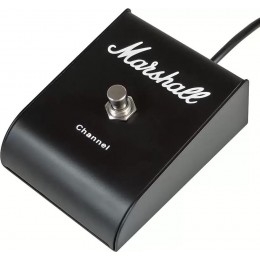
There’s usually a footswitch you can connect to select which channel you want, but you might also find a switch on the amp that does the same thing.

Effects Loop

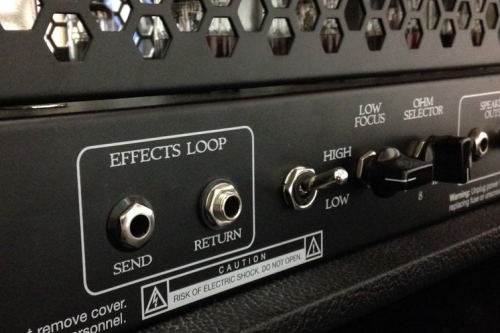
If your amp has an effects loop it’ll typically be on the back panel. To learn more about why you might want to use an effects loop, check out this article on pedal signal chain. Using the loop isn’t all that complicated. You plug a lead in from the “send” on your amp into the input of your pedal. The lead from the output of your pedal goes into the “return” of the loop on your amp.
Power amp

Master Volume

This one is pretty straight forward: it dictates how loud the power amp makes the signal before handing it to the speaker. I should clarify what’s happening here though.

Your power amp is actually always fully cranked, amplifying anything it’s given as much as it can. Much like how the gain knob controls how much signal comes into the pre amp, the master volume knob controls how much signal gets passed from the pre amp onto the power amp.

Presence

When you turn down the Master Volume, you might lose some of the high end from your tone. The Presence control is like a treble control for your power amp, allowing you to recover any lost top end once you turn the volume down.

Speaker Out

This is where you plug a lead from your amp to your speaker. It’s critical you don’t get this bit wrong. First of all, despite looking pretty much the same, instrument cables and speaker cables are different. Even though they both fit into these sockets, it’s important you only use speaker cables for this job, as using an instrument cable here could do damage. Plugging a speaker cable into your guitar would make it vulnerable to interference and noise.

The other thing to look out for here is making sure the amp impedance and speaker impedance match. I could (and probably should) write a whole post about speaker impedances and how to calculate the ohms for different combinations of speakers. For now though, just know that this requires caution. Don’t feel silly consulting your amp’s manual or asking for help from someone who knows about it.

One more caution about this part of the amp: if your amp is a valve amp, never turn it on without a speaker connected.

Dialling it all in

Quiet practice at home

Get the volume to a level you can work with, and then adjust the gain and eq to compensate for the overall reduction in sound. This is where the presence knob will come in handy.

With the volume knob on your guitar set to about half way, turn the gain on your amp up until it starts to break up, and then back it off a tiny bit. This will give you as much sustain and harmonic content as you can get while still having a clean tone. From there you can either use pedals for your drive sounds, use another channel in your amp, or simply roll your guitar’s volume up and hit the strings harder to push the amp into overdrive.

In a band setting

While the band is making a lot of noise, set your volume so you can hear yourself clearly. You won’t win a prize for being the loudest person in the room, and it’s pointless not having it loud enough for you and the rest of the band to hear.

Now adjust your gain as outlined above and set your eq to taste. It’s important to do all this while the band is playing at performance volume, as your audible frequencies are different in a band mix.

If you have the luxury of being able to play fairly loud, try this: Once you’ve got your clean sound dialled in with the pre amp gain at edge-of-break-up, turn the master volume up until the power amp starts to overdrive, then back it off just a little. Now when you push the amp into overdrive you’ll have both the pre amp and power amp breaking up. This is what people refer to as natural amp overdrive. If you only use the pre amp on its own for drive sounds, you’re missing out.

Classic Amp Sounds

While describing the tonal characteristics of an amp or pedal, people will often reference classic amp sounds. No doubt you’ve heard terms like “Fender cleans”, or “cranked Marshall” to describe how something sounds.

That’s not very helpful if you have no idea what they’re referring to. Hopefully we can fix that by having a look at the sort of sounds different classic amps are known for and why they sound the way they do.

Fender

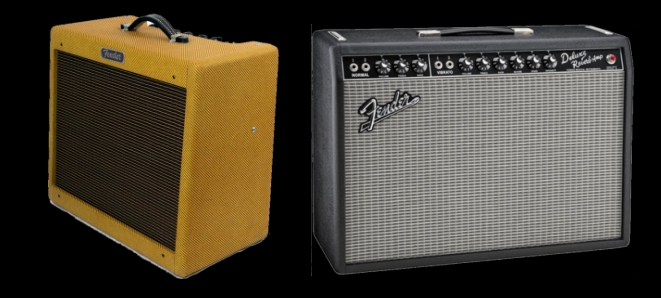
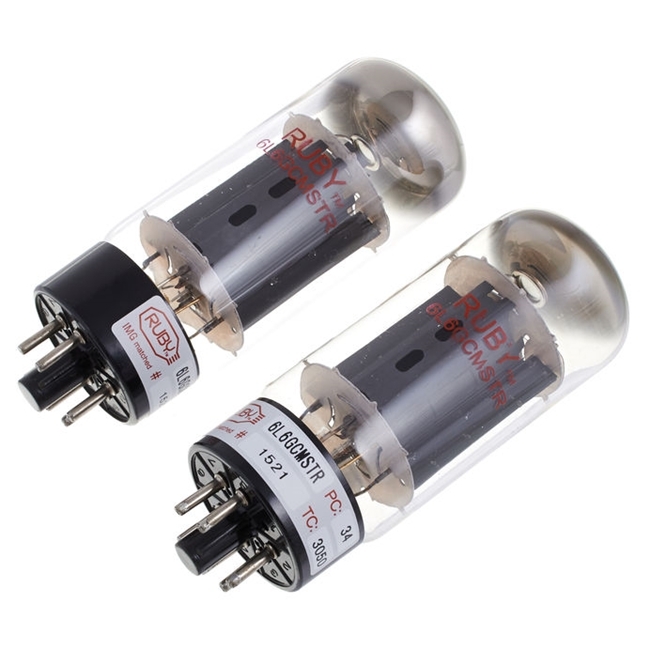
In the early days overdrive was something to be avoided, so Fender aimed to make an amp that could get loud without breaking up. In the power amp they typically have a pair of 6L6 tubes, providing bucket loads of clean headroom.

6L6 Power Tubes

At low to mid volume levels they tend to have a scooped mid range. This emphasises the high and low end, making those clean tones sound big and smooth.

As you turn them up, more mid range starts to roll in. If you crank them all the way up, magic happens: When an amp that was designed not to break up is pushed so hard that it does, you get a glorious, massive sounding overdrive.

Tweed vs Black Panel

The sound outlined above probably best describes what is known as the black panel tone, or “blackface” to those for whom that phrase doesn’t primarily conjure up mental images of black and white minstrels. I’m not being “woke”, do an image search on “blackface” and let me know in the comments how many Fender amps you see.

We’re referring to the black control panel on the more modern Fender amps. Prior to this, Fender had their tweed range. These amps were far less powerful, and when turned up to stage levels would often start to overdrive. The tweed sound is associated with early gritty blues guitar sounds.

Marshall

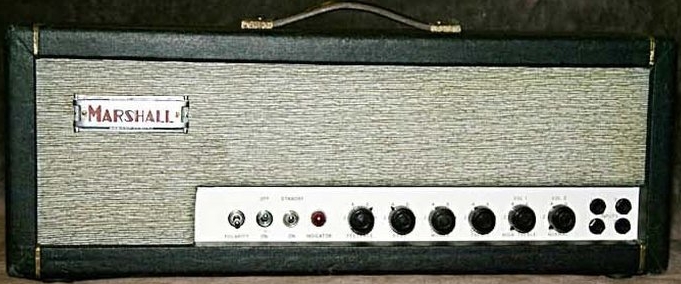
Marshall’s first amps were an attempt to copy Fender’s offerings. Being made on a different continent meant that different components had to be utilised, and to accommodate those different parts, design changes were made.

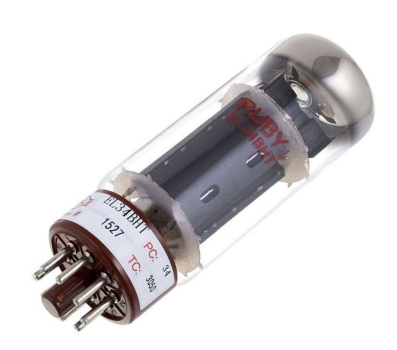
Using EL34 tubes in the power amp meant they could be pushed into overdrive sooner. They also typically had much more mid range than a Fender.

EL34 Power Tube

They became notorious for their overdrive and mid-focussed tone, which made them an obvious choice for early rock guitar pioneers.

Hiwatt

When most people think of Hiwatt amplifiers, they think of ridiculous volume levels. These things are loud. They have the endless clean headroom of a Fender with an EQ curve somewhere closer to a Marshall.

Vox

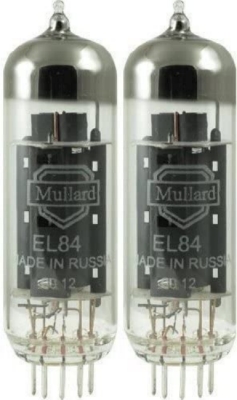
These amps are best known for their top end response. You can hear this in the Beatles’ chimey, jangley clean tones, and Brian May’s treble focussed overdrive sounds in Queen. In the power amp they utilise EL84 tubes, which are a bit like EL34s but with less headroom. This means they’re often quieter and quicker to break up than a Marshall.

Vox AC30

EL84 Power Tubes

Orange

Think of Orange amplifiers as being like a Marshall only more so. They have more aggressive mid range and more gain on tap, allowing for heavy overdrive from the preamp section without having to crank the power amp into break up.

Mesa Boogie

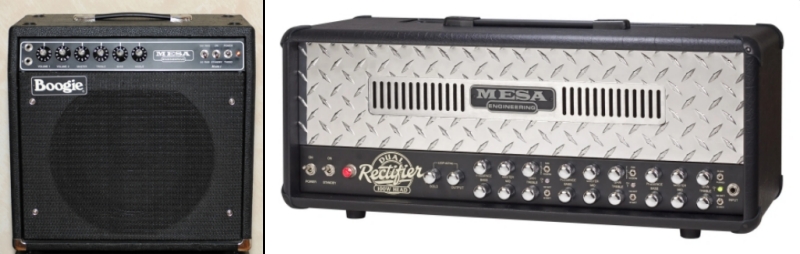
The first ever Mesa amps were actually modded and re-badged Fender Princetons. They have a tonal response somewhere in the ball park of a Fender, but usually with many more features. The most common of those features would be a high gain channel.

The distortion sounds from the Dual Rectifier were pretty much the heavy metal standard from the early 90s to the late 00s.

“American Sound” vs “British Sound”

The big names on the American market were Fender and Mesa. Their sounds are typically high headroom and low mid range, with super sweet clean tones. Most people think of Vox and Marshall when they refer to the “British” sound, implying a more mid range to high end focus and earlier power amp break up.

The Brown Sound

This has nothing to do with the “brown note”, or the extreme low frequencies rumoured to cause fecal incontinence. It does however refer to a high gain guitar tone that has the potential to make rock guitarists shit themselves with excitement when they hear it.

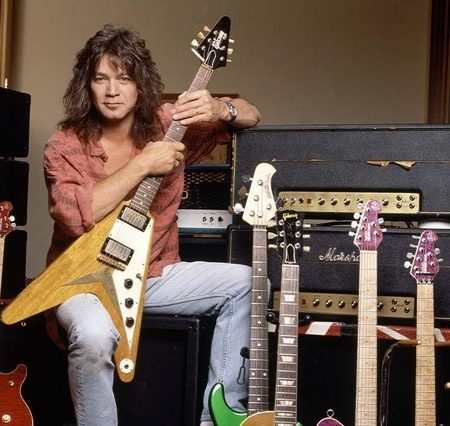
Edward Van Halen used this term to describe his tone. In the early days, that tone was achieved by way of a Marshall Super Lead with everything turned all the way up. Where most rock guitarists were aiming to cut through the mix with plenty of mids and treble but little bottom end, Van Halen wanted a warmer sound that retained bottom end. I should note that over the years he used less and less mid range in his tone.

In general though, if someone refers to the “Brown Sound”, they’re probably talking about a high gain sound with a balanced EQ and the volume as loud as you’re prepared to push it.

Disclaimer

What I’ve described above are all gross generalisations. In this context though (making sense of buzz words like “British tone” or “Fender cleans”) generalisations can be helpful. It’s important to note that you can get two amps of the same model and have them sound different to each other. My goal here was not so much to help you choose which amp to buy, but to help you decipher marketing hype with music gear in general.

Intro to Pedals Part 3: Power Supplies

So far we’ve looked at why you might want to alter your sound with pedals, and outlined a sensible approach to discovering which pedals might be relevant to you. I’ve covered how multi effects units aren’t completely useless, but that few people stick with them, they don’t hold any re-sale value, and as such aren’t where you want to spend the bulk of your gear budget.

If you’ve been following so far you’ll probably have a few pedals and have plugged them in and started having fun with them. It’s time to start thinking about power solutions.

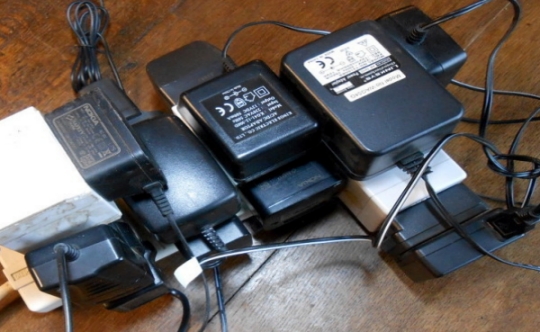
Powering pedals can be fairly impractical. You’ll either go through a lot of 9 volt batteries or have a comical arrangement of wall-wart power adapters. Surely this isn’t what the pros do?

There are of course more practical solutions. Before we get into those, we’ll need to pause for a moment and get a boring but essential bit of science out of the way. When plugging a power lead into a pedal you always need to consider four things:

Voltage, Current, Polarity, and Isolation


Voltage

Most pedals operate at 9 volts, some require more, and some can take more (eg overdrive pedals with different amounts of headroom available). Not providing enough voltage might not damage your pedal, but it will quite likely sound horrible. Providing too much voltage will almost certainly fry your pedal. Before you power up a pedal, be sure of its voltage requirements.


Current

This is a simple concept which confuses many. Current is measured in amps (A) or milliamps (mA), and is a way of measuring how thirsty a device is, not a limit on how much electricity you can throw at it. The mA requirement of your pedal is the minimum it requires to function, and likely how much it will draw from your power supply.

It is perfectly safe to connect a 200mA power supply to a pedal requiring 100mA. The power supply will make 200mA available, but the pedal will only take the 100mA that it needs. If a power supply doesn’t provide enough mA, the pedal won’t function properly or even turn on. Best practice is to have your power supply offer more mA than your pedal requires.


Polarity

Like the tip and the sleeve on your audio cables, power cable connectors have two separate parts to consider. They will either be centre positive or centre negative.

Most pedals will be centre negative, but occasionally (like with some old Proco Rats) you’ll get one that’s centre positive. Be sure of which way around your power lead is, and which way your pedal is designed. If you get this wrong your pedal will either simply not turn on, or end up completely fried. Toss a coin. Whatever the outcome, you’re not going to be using that pedal today.


Isolation

This refers to making sure your pedals don’t share a ground connection.

Pedals often use their ground connection like a sewer line. They dump certain audio frequencies (like the clipped part of your signal in a drive pedal) by sending them to ground. If you hook your pedals up so they share a ground connection (think “pedal sewer line”), these audio artefacts, along with some electricity, could end up being reintroduced to the audio signal of other pedals in your chain. Just like you wouldn’t want your neighbours’ sewerage backing up in your house, your pedals don’t want to be awash with crap from other pedals in the chain.

This could result in anything from a mild, low level hum all the way through to crazy, high-pitched, whistling oscillation noises which can be tricky to troubleshoot.

For example, some folks will complain that a delay pedal at the end of their chain is making a weird noise, when in fact a fuzz pedal at the start of the chain is generating it. It might just be that only the delay pedal is picking it up and making it audible. The solution is not to remove the fuzz or the delay, but to make sure they’re not sharing a ground connection.

So What Should I use?

Daisy Chains

The first thing most rookies try, no doubt because of the low cost and simplicity of it all, is to daisy chain your pedals. This involves one power adapter which plugs into a series of connected cables. This might work for some pedals some of the time, but is generally considered a horrible idea.

All of your pedals are drawing their power from the one source, potentially under-powering them, leading to them not functioning correctly and not sounding quite right. The more noticeable problem though is that they all share an earth connection which could lead to audio interference between pedals (see isolation section above).

If you insist on doing this, you can get away with it under some circumstances. I’d maybe consider it if you have a simple pedal board with only a tuner and a drive pedal or two.

Mixing digital and analogue pedals seems to be the main issue. I believe analogue pedals tend to generate most of the noise in a shared ground connection, while digital pedals pick it up and make it audible. While we’re at it, digital pedals should probably be isolated from each other too. When it comes to power, they just don’t play well with others.

Of course, make sure the adaptor at the start of your daisy chain is providing the correct voltage and enough current for all of your pedals. You’ll typically want a 9v adaptor with a crazy high current. Add together the mA draw of all the pedals you’re going to daisy chain, and make sure the power supply can offer at least that much, preferably more.

1 Spot are the kings of daisy chain solutions, while most other budget pedal brands like Mosky, Donner, and Joyo tend to have something on offer.


Power Bricks

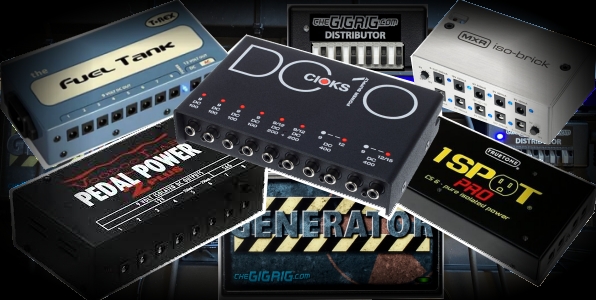
You can buy a power “brick” which takes up only one wall socket space, will convert your AC mains power into DC power at the correct voltage for your pedals, and will have multiple outlets for your pedals to plug into.

They vary massively in price, so let’s have a quick look at what you’re paying for and which features might be important to you.

Some bricks provide surge protection, and most should provide clean, regulated power to your pedals.

The main thing which separates the cheap power supplies from the expensive ones is isolation. The whole point of getting one of these is to provide isolated power to your pedals, so it makes no sense to get one which doesn’t. There are inexpensive ones which are nothing more than a tidier version of a daisy chain solution, offering no isolation whatsoever.

Maddeningly, some claim to be “isolated” while not actually being isolated in the sense we’re thinking of. The power supply itself is isolated from other devices, sure, but we want each of its outputs to be isolated from each other. Look for the words “isolated outputs” or something like that. Don’t be content with merely seeing the word “isolated” in the product description.

The number of outputs will have an impact on the price. Get one with more outputs than you think you need. I don’t care if you think you have all the pedals you’ll ever need to power up, I know you’re lying to yourself even if you don’t. If you get a five outlet power supply, don’t come crying to me when pedal number six shows up and you have nowhere to plug it in.

However much you save by getting the smaller power supply, think of how much more expensive it will be when you have to buy a second one. It will happen. You’ve been warned.

Some will come with a few outputs which are a higher voltage. This can be handy if you have pedals which require more than 9 volts, or it could be a waste of an output if you don’t. Some of these will be switchable between 9 volts and 12 or 18 volts, which is the best option. Just make sure you’re not paying for a power supply with outputs you can’t use.

Just like with the daisy chain solution, you’ll need to figure out how much current you need. Add up the mA of all of your pedals, and make sure the power supply you get can deliver equal to or greater than that amount. There’s no point getting a power supply with over 20 outputs if it only has enough mA to drive one pedal.

Also consider the size of the power supply. If you intend on sticking it underneath a pedal board, you need to make sure it will fit.

It used to be the case that no modest budget power bricks were isolated, and if they said they were, it was mere marketing trickery. That’s not the case as much these days. Check the specs and read reviews. You’ll find many units where someone has bought one and tested the outputs with a multimeter to confirm if they are indeed isolated.

At the budget end of the spectrum, have a look at Caline and Mosky. At the more mid-priced to professional end have a look at:

Probably one of the most expensive yet best value power supplies on the market is from GigRig. They provide a modular solution, meaning when you run out of outputs, you’re not stuck having to buy a whole new power supply. You can simply buy another adaptor with more outputs and plug it into an output of the unit you already have.

To kick start the whole thing, you buy their “Generator”. This provides clean, regulated, surge protected power at a whopping 5 Amps. From there you plug in a “distributer” which gives you 4 outputs. Into each one of those outputs you can plug in an “Isolator” which each provide 4 isolated outputs. This results in 16 isolated outputs. If pedal number 17 ever turns up you can get another isolator and plug it into one of the outputs of one of your other isolators.

GigRig pride themselves on being the best in the business when it comes to durability, quality control, aftermarket support, and most importantly making sure your guitar tone remains pure and untainted. For the record, I don’t have an affiliate marketing arrangement with the GigRig. It’s common knowledge in the industry that GigRig is the Rolls Royce of pedal power supplies.


Next time we’ll look at pedal boards themselves, patch cables, and a few things to look out for when putting it all together.

Understanding Pickups

In this post I’m going to try to de-mystify pickups. We’ll go over how they’re made and how they work, what’s available, and things to bear in mind when choosing pickups. This will hardly be an exhaustive explanation, but at the very least will hopefully be a springboard for your own Google and Wikipedia searches.

This is a massive topic, so I suppose a sensible place to start would be at the beginning.


Where it all began
It was around 1936 by the time guitar manufacturers stopped mucking around with horse-shoe magnets and the like, and Gibson came out with what we know as the “Charlie Christian” pickup.

It had a bunch of wire wrapped around a bobbin with a metal “blade” running along the middle of it under the strings. Beneath that coil there were two flat bar magnets. These pickups had a clear sound and relatively high output, but were fairly noisy by today’s standards. Mind you, there wasn’t much in the way of fluorescent or dimmable lights back then to contribute interference.

You can still buy modern versions of these, although they’re mostly used by jazz guitarists chasing a particular vintage sound.


P-90s
In the early 40s Gibson upgraded from the “Charlie Christian” to the P-90. They used thinner wire and managed to get much more of it wound on the bobbin. The blade was gone in favour of six individual pole pieces lined up with the strings. This pickup had a brighter sound and higher output.

P-90s are still quite common these days, and modern versions are somewhat less noisy. They’re mostly used in a rock, blues, or punk context, as they couple quite nicely with overdrive. Having said that, some pretty sweet jazz sounds can be obtained with a P-90 in the neck position.


Fender’s Single Coils
In the early 50s Fender threw their hat in the ring. They brought out the Telecaster and Stratocaster which had their own design of pickups in them.

Leo Fender was a notorious tight-ass, so it came as no surprise when his pickups were made more efficiently and with less materials. Instead of great big bar magnets under the coil with pole pieces poking up through the bobbin, these pickups utilised six individual magnetic slugs for pole pieces.

They had less noise, lower output, and a crisper, brighter tone than P-90s.


Humbuckers
So far all these pickups had a tendency to hum. A lot of fuss has been made about this “60 cycle” hum, but truth be told it’s only really a big problem:

  • At high gain settings
  • When you stop playing and keep your volume right up, and
  • If you’re standing at the wrong angle to your amp

Still, around 1955 a Gibson employee by the name of Seth Lover attempted to create a version of the P-90 that didn’t hum. The end result looked a lot like two of Fender’s single coil pickups back-to-back with reverse winding and reverse polarity.

The two opposing coils cancelled out each other’s hum. They produced a higher output and tended to be a bit warmer/darker sounding than their single coil predecessors.


How does pickup construction affect sound?

Output
High output can be great for adding fuel to a high gain sound. An amp set to the limit of its clean sound can be pushed past edge-of-break-up into overdrive when you wind you’re guitar’s volume knob up. It’s important to remember that with high signal strength usually comes some amount of compression. This helps with sustain but can reduce playing dynamics. It won’t matter how hard or soft you hit the strings, the volume remains the same.

Low output pickups can make a mild overdrive seem almost clean without the signal strength to make it break up adequately. On the other hand, the lack of compression means greater pick sensitivity and dynamic scope, which allows for more expressive playing. Your sound gets louder and quieter according to your pick attack.


Wire
The higher the KΩ rating, the more wire there is likely to be on the pickup. More wire usually results in higher output and warmer tone. Likewise, a thicker gauge of wire will typically have a warmer tone. Conversely, less wire and thinner wire would typically mean a brighter tone with lower output.


Magnets
Generally speaking, the stronger the magnet, the higher the output of the pickup. Having the strength of a pickup’s signal bolstered by the strength of the magnet means you don’t need as much wire to achieve the same output level. This allows for high output pickups with a bright sound.

The most common types of magnets found in guitar pickups are alnico (aluminium, nickel, cobalt) and ceramic. Alnico magnets will commonly have a number associated with them. The higher the number, the stronger the magnet. Ceramic magnets tend to be stronger than Alnico.

So if you’ve ever wondered how you can get different tones from different pickups, hopefully this helps explain it. You can mix and match magnet strength with quantity and thickness of wire to achieve different levels of output and brightness or warmth.


Comparatively speaking…

With all that in mind it would be fair to make the following observations:

Fender style single coils are some of the lowest output and brightest sounding pickups around. This is particularly true with strats.

Tele bridge pickups can be a bit of an anomaly. They’re positioned on a bit of an angle, as they’re too big for the guitar and the pole pieces wouldn’t line up with the strings if they weren’t installed like that. They were originally re-purposed lap steel pickups (did I mention Leo Fender was a tight-ass?), hence their odd size.

In order for a bit of wire to complete one loop around the larger bobbin, it would have to be longer. As a result you have more wire and higher output on a tele bridge pickup than you would typically get from a strat. They also have a metal base plate which adds to the output and arguably the tone as well.

Being bright with high output leaves the Tele bridge pickup in similar sonic territory to a P-90:

  • Single coil dynamics/pick sensitivity
  • Not quite as high output as a humbucker but more than a strat single coil
  • Not quite as bright as a strat but brighter than a humbucker


Choosing Pickups

If you’re thinking about changing your pickups you’ll need to consider:

  • The level of output you’re after
  • Tonal preference (may need bright pickups if plugging into a dark sounding amp and vice versa)
  • The size and shape of the route on your guitar where you’ll be installing said pickup. These days pickup manufacturers have managed to produce:
    • Single coil sized humbuckers
    • Humbucker sized P-90s
    • “Active” pickups with a built in pre amp for even higher output and tone shaping capabilities. These require an extra section routed out of your guitar to allow for a battery compartment.


After sorting that out, you’ll want to check out the catalogues of a few brands to see what they offer that meets your needs. Once you have a short list of contenders, I’d advise going to Youtube and searching for that particular pickup model and your amp to hear examples of how they go together. Look up a few written reviews, but take those with a grain of salt.

Ultimately the best way to decide would be to play a guitar with that pickup in it plugged into your amp, but that’s rarely possible.


Brands

If you’re going to put together a short list, you’ll need to get an idea of what’s out there. I’ve compiled a very short list of brands here to get you started.

Its almost impossible to have a discussion about after market pickups and not mention Seymour Duncan. They have an extensive range of professional quality pickups and are probably one of the most popular brands on the market.

Likewise with DiMarzio. For many years they’ve been Ibanez’s first choice for pickups. They have a similar range and reputation to Seymour Duncan and are well worth checking out.

Fender and Gibson sell their own pickups as aftermarket upgrades. If you’d like to add a taste of their legendary tone to a cheaper guitar, this could be one way to go about it.

Bareknuckle are rapidly gaining a reputation for high quality pickups, especially in the high output department.

EMG have a popular range and have built a reputation around their active pickups. Famously endorsed by James Hetfield and used by a long list of other metal guitarists.


For many years there wasn’t a lot of competition in the pickup market, and manufacturers could pretty much name their price. This set a precedent, and most pickups tend to be unjustifiably expensive. Some more recent pickup manufacturers are looking to buck that trend.


Firstly, there’s IronGear Pickups. Their whole philosophy is that you shouldn’t have to spend a huge amount of money to achieve outstanding tone. They pride themselves on their attention to detail with tone and quality control at reasonable prices.

They’re out to give the major players a run for their money. While I’m not sure they’ll bother them too much in terms of market share, their pickups are definitely worth a listen.

Secondly, there’s Tonerider. While they’re not thumping their chests and declaring a crusade against the big boys like IronGear seem to be, their range of pickups are at a similar price point and level of quality. Do yourself a favour and check them out.